


Copper vs. Light: Decoding the Champions of Communication Cables
Abstrakt:
In the digital age, information flows through physical pathways. Understanding the critical differences between traditional communication cables (copper-based) and modern communication optical cables (fiber optic) is essential for optimal network design. This article dissects their core structures, transmission principles, and performance across six key dimensions: transmission medium, speed/bandwidth, interference resistance, distance capabilities, cost/size factors, and security/future trends. Choosing the right cable impacts everything from your internet speed to your network’s longevity.
Introduction:
The Arteries of Information Our hyper-connected world relies on an invisible network of cables silently transmitting vast amounts of data. Communication cables and communication optical cables are the fundamental infrastructure enabling phone calls, streaming video, cloud computing, and global finance. While both serve the vital purpose of data transport, they achieve it through fundamentally different technologies, leading to distinct strengths and applications. This guide delves deep into the “how” and “why” behind copper and fiber optic cables, empowering you to make informed decisions for any communication need.
1. Transmission Medium: Electrons vs. Photons
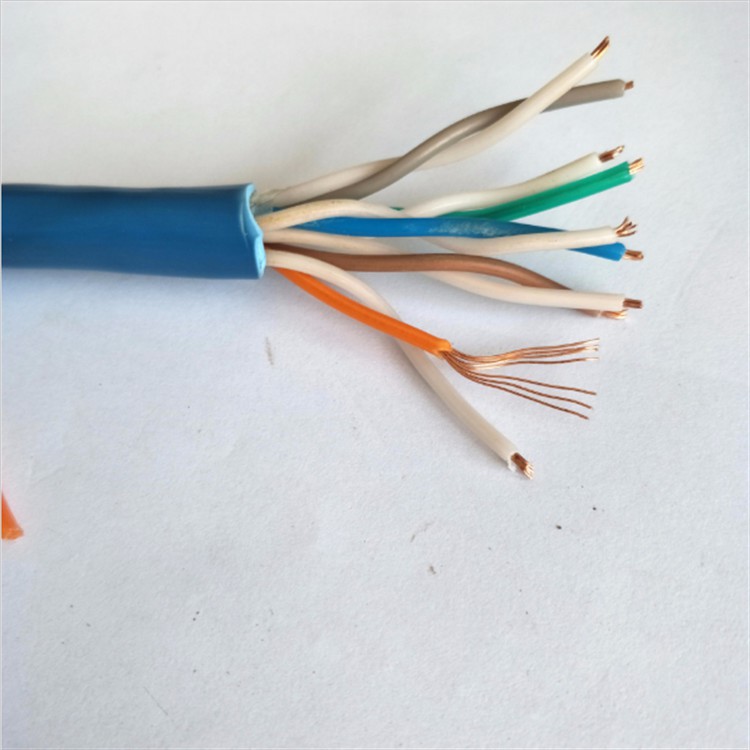
- Communication Cables (Copper): These cables rely on the flow of electrical current through metallic conductors, typically copper (sometimes aluminum). Information is encoded as variations in voltage or current traveling along these wires. Common types include twisted pair cables (like Cat 6 for Ethernet) and coaxial cables (used for cable TV).
- Communication Optical Cables (Fiber): Fiber optic cables transmit information using pulses of light (photons) guided through an ultra-thin glass or plastic core. The light signal is modulated to carry digital data. The core is surrounded by cladding with a lower refractive index, causing the light to reflect internally and travel down the fiber.
- Implication: This fundamental difference dictates all other performance characteristics. Copper is susceptible to electrical phenomena, while light in fiber is governed by optical physics. Learn more about electromagnetic wave propagation on IEEE Xplore.
2. Speed & Bandwidth: The Data Highway Capacity
- Communication Cables (Copper): Copper cables face significant physical limitations. Electrical signals are prone to attenuation (signal loss) and interference at higher frequencies, limiting their maximum data rates and bandwidth. While advancements like Cat 8 push copper further, practical multi-gigabit speeds over distance remain challenging. Bandwidth is typically measured in MHz for copper (e.g., Cat 6: 250 MHz).
- Communication Optical Cables (Fiber): Fiber optic cables offer vastly superior speed and bandwidth. Light signals experience far less attenuation and are unaffected by the electromagnetic limitations of electricity. Single-mode fiber can carry data at terabits per second (Tbps) over immense distances. Bandwidth is measured in GHz or THz, orders of magnitude higher than copper. Explore bandwidth potential on Corning’s Optical Fiber Resources.
- Implication: Fiber is the undisputed choice for high-bandwidth applications like data center backbones, 5G/6G fronthaul/backhaul, high-definition video streaming, and scientific data transfer.
3. Interference & Signal Integrity: Battling Noise
- Communication Cables (Copper): Copper wires act like antennas, making them highly susceptible to Electromagnetic Interference (EMI) from sources like power lines, motors, fluorescent lights, and radio transmitters. They also emit signals (crosstalk), interfering with adjacent wires. Shielding (e.g., STP, FTP, coaxial) mitigates this but adds cost and bulk. Grounding is also critical and can be complex.
- Communication Optical Cables (Fiber): Fiber optic cables are inherently immune to EMI and Radio Frequency Interference (RFI). Since they transmit light, not electricity, external electromagnetic fields have no effect on the signal within the glass fiber. They also produce no EMI and are immune to crosstalk between fibers in the same cable.
- Implication: Fiber provides superior signal integrity and reliability in electrically noisy environments (industrial plants, hospitals, near power substations) or where security is paramount. Copper requires careful shielding and routing.
4. Transmission Distance: How Far Can You Go?
- Communication Cables (Copper): Signal attenuation and distortion increase significantly with distance and frequency in copper cables. This necessitates repeaters or signal boosters relatively frequently (e.g., every 100 meters for Gigabit Ethernet over Cat 5e/6). Long-distance copper links suffer severe degradation.
- Communication Optical Cables (Fiber): Fiber optic cables exhibit extremely low signal loss. Single-mode fiber, designed for long hauls, can transmit signals for tens or even hundreds of kilometers without needing regeneration, relying only on optical amplifiers. Multi-mode fiber covers shorter distances (up to ~2km) but still far exceeds typical copper limits within buildings or campuses. See typical distance specs on Belden’s Copper vs. Fiber Guide.
- Implication: Fiber is essential for long-distance telecommunications, undersea cables, and connecting geographically dispersed sites. Copper is suitable for localized connections within a room or building.
5. Cost, Size & Weight: Practical Considerations
- Communication Cables (Copper): Copper cable materials (especially copper itself) are generally cheaper per meter than fiber optic cable. Installation tools and connectors (RJ45) are also less expensive and widely understood by technicians. However, copper cables are thicker and heavier for equivalent capacity, requiring larger conduits. Shielding adds further bulk and cost.
- Communication Optical Cables (Fiber): While the raw fiber optic cable cost per meter is competitive, the transceivers (devices converting electrical signals to light and vice versa) and termination equipment (fusion splicers, precision connectors) are significantly more expensive. Installation requires specialized skills and tools. Crucially, fiber is much thinner and lighter than copper cables carrying the same data capacity, saving significant space in crowded ducts and data centers.
- Implication: Copper has a lower initial entry cost for small, short-distance deployments. Fiber offers superior space/weight savings and long-term value for high-bandwidth or long-distance needs, despite higher transceiver costs. Total cost of ownership (TCO) must be evaluated.
6. Security & Future-Proofing: Protecting Data and Investment
- Communication Cables (Copper): Tapping copper cables to intercept data is relatively easier; attackers can detect the electromagnetic fields emitted by the wires. Physical security and encryption protocols (like those on NIST’s Cybersecurity Framework) are essential but add overhead. Copper bandwidth is nearing theoretical limits, offering less headroom for future upgrades.
- Communication Optical Cables (Fiber): Tapping fiber is extremely difficult. It requires physically accessing and bending the cable to cause light leakage, which is easily detectable by monitoring systems. Fiber inherently emits no external signal, making eavesdropping much harder. Furthermore, the bandwidth potential of fiber is enormous and far from exhausted, providing significant “future-proofing” as data demands inevitably grow.
- Implication: Fiber offers inherent physical security advantages and is the clear choice for long-term infrastructure investments needing scalability for decades. Copper requires more layers of security and may need replacement sooner as demands increase.
Conclusion: Choosing the Right Tool for the Job
Communication cables and communication optical cables are not direct competitors but complementary technologies optimized for different scenarios. Copper cables, leveraging mature and cost-effective electrical transmission, remain the practical choice for short-distance, lower-bandwidth applications within buildings, PoE (Power over Ethernet) delivery, and cost-sensitive deployments where extreme speed isn’t critical.
Fiber optic cables, harnessing the power of light, are the undisputed backbone of modern high-speed, long-distance communication. Their unparalleled bandwidth, immunity to interference, long reach, small size, enhanced security, and vast future potential make them essential for telecommunications networks, internet backbones, data centers, 5G/6G infrastructure, and any application demanding high performance and reliability over distance.
The choice between copper and fiber hinges on specific requirements: required bandwidth, transmission distance, environmental interference, security needs, budget constraints (initial vs. long-term), and future growth plans. Understanding these six critical dimensions – transmission medium, speed/bandwidth, interference resistance, distance, cost/size, and security/future-proofing – provides the framework for selecting the optimal communication pathway, ensuring your data flows efficiently, securely, and reliably into the future.