


Copper core cable ushered in the golden decade: five major trends reconstructed the trillion-dollar industry pattern
A high-quality copper core cable is becoming the invisible backbone supporting the global energy transformation and digital revolution.
Under the wave of global energy transformation, the copper core wire and cable industry is ushering in unprecedented growth opportunities. With the penetration rate of electric vehicles breaking through the 20% mark, the surge in renewable energy installed capacity, and the acceleration of global deployment of 5G networks, the market demand for high-efficiency conductive materials has shown explosive growth.
At the same time, the popularization of Industry 4.0 intelligent production and green building standards is forcing the traditional cable industry to upgrade its technology. Copper, with its excellent conductivity and ductility, has shown irreplaceable value in many application scenarios, driving the global market to continue to expand at an annual compound growth rate of 6.5%.
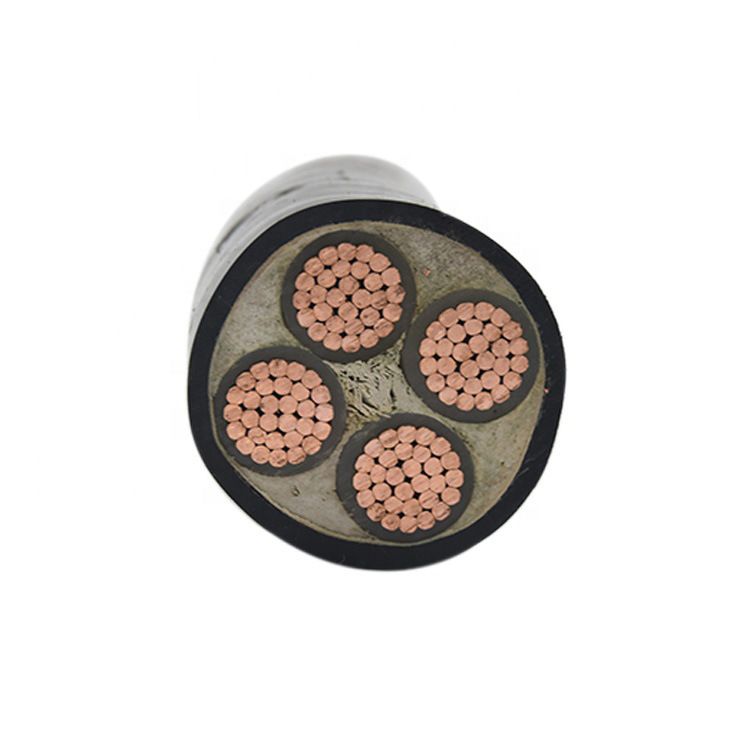
New energy revolution drives explosive growth in demand for copper core cables
Electric vehicles and renewable energy have become the largest incremental source of the copper core cable market. Compared with traditional fuel vehicles, each electric vehicle uses up to 80 kilograms of copper, which is four times that of traditional vehicles.
As the global penetration rate of electric vehicles exceeds 20% in 2025, the automotive manufacturing sector alone will generate a demand for millions of tons of copper. In the field of energy infrastructure, photovoltaic power stations consume about 5,000 tons of copper per GW installed, and wind farms also need 3,000 tons of copper per GW.
These clean energy projects rely on high-performance copper core cables to achieve power transmission from the power generation end to the grid connection end. China, Europe, the United States and emerging markets have strongly promoted energy transformation through policies, such as the US “Inflation Reduction Act” and the EU’s “Critical Raw Materials Act” directly stimulated investment in copper-intensive industries.
Infrastructure projects in developing countries such as India’s “National Infrastructure Pipeline Plan” have further expanded the growth space of the global copper core cable market. The demand for grid upgrades cannot be ignored either. China continues to promote the construction of ultra-high voltage power grids, and Europe promotes grid interconnection projects. These national-level projects require the laying of tens of thousands of kilometers of high-voltage transmission lines.
**Copper core cables have become the preferred material for power transmission systems due to their high conductivity and durability, supporting the low-carbon transformation of the global energy structure.
Industrial upgrading and technological innovation reshape the competitive landscape
Faced with structural changes in market demand, leading companies are breaking international monopolies through technological breakthroughs. The “low-temperature porcelain-insulated fireproof cable” developed by Wuchan Zhongda Yuantong Cable won the second prize of Zhejiang Science and Technology Progress Award. This technology is the first in the world to achieve large-scale industrial production without defect control, which has increased production efficiency by 99 times and the product qualification rate has reached 99.5%.
In the field of industrial automation, domestic robot cables have long relied on imports. By optimizing the conductor structure and twisting design, domestic companies have developed highly flexible cables that can withstand 50 million bends. The performance has reached the international advanced level and has been successfully applied to major projects such as petroleum and heavy industry.
Intelligent production mode is rewriting the rules of the game in the industry. The “factory of the future” created by Wuchan Zhongda Yuantong Cable has achieved full-process digital management through 5G, industrial Internet and digital twin technology.
Its Deqing intelligent manufacturing base uses AI large models to optimize the production process, so that the networking rate of key equipment reaches 100%, which greatly improves production efficiency and product consistency. Yunnan Duobao Cable Group’s innovation also reflects the direction of industry upgrading. Its patented environmentally friendly and energy-saving wiring cable adopts an innovative installation mechanism design, which simplifies the installation process through telescopic rods and curved plate structures to improve construction efficiency.
These technological innovations not only break the foreign technology monopoly, but also promote the transformation of China’s cable industry from “following” to “leading”.
Greening and intelligence lead product evolution
Environmental protection standards and energy-saving requirements are driving material innovation. The EU RoHS directive and China’s dual carbon policy set strict limits on the content of harmful substances in cables. In response to these standards, the industry has developed high-voltage connection soft cables with high temperature resistance of 125-150℃, which have the characteristics of high shielding efficiency, softness and lightness, and good oil resistance.
These environmentally friendly products are particularly popular in the fields of new energy vehicles and smart homes. In terms of energy-saving technology, the new annealed copper core can reduce the resistivity by 3%, effectively reducing the loss of power transmission. The cast bus duct adopts modified epoxy resin material, with a temperature resistance of H grade (180℃), a service life of 40 years, and a life cycle energy consumption of 35%-50% lower than that of traditional cables.
Industry 4.0 scenarios place higher demands on cable performance. The intelligent cable management system developed by ICOTEK ensures stable connection under the continuous movement of robots through a separable cable introduction system and stress relief technology.
Its products have reached IP66/IP68 protection level and UL certification, meeting the stringent requirements of detergent resistance and UV aging resistance in industrial environments. With the popularization of smart factories, the demand for special cables suitable for highly flexible scenarios has surged. Such products not only need to withstand tens of millions of bending tests, but also need to have anti-electromagnetic interference capabilities to ensure the integrity of data signal transmission.
The circular economy value of copper materials is highlighted
In terms of sustainable resource utilization, copper shows unique advantages. After the drive motor of a new energy vehicle is scrapped, its copper electromagnetic wire can be directly reused after simple disassembly and cleaning, without the need for remelting, which greatly reduces the energy consumption and cost of recycling.
The recycling of automotive copper wire harnesses has formed a mature industrial chain, especially the high-voltage wire harnesses of new energy vehicles, which have a high copper content and a recycling value significantly higher than that of traditional vehicles. Lithium battery recycling has become a key link in the circulation of copper resources.
With the surge in global demand for lithium batteries, the demand for lithium battery copper foil in China alone will reach 1.25 million tons by 2025. The recycling technology of copper foil in retired batteries is becoming more and more mature, forming a closed loop of “production-use-recycling-reproduction”.
This circular economy model effectively alleviates the pressure on mineral resources, making copper one of the most sustainable basic materials in the era of electrification**. Technological development is also continuously improving the utilization efficiency of copper resources.
Breakthroughs in ultra-thin copper foil, high-efficiency motors and precision wiring harness technology have gradually reduced the amount of copper used per unit product. Experts predict that by 2030, the incremental demand for copper materials in new energy vehicles may be basically met through recycling. This improvement in resource efficiency further strengthens the strategic position of copper core cables in the green energy system.
Industry Challenges and Differentiated Competitive Strategies
Despite the bright prospects, the copper core cable industry still faces multiple challenges. Alternative technologies such as bus ducts pose a competitive threat in the medium and high voltage fields. The dense bus duct uses high-purity electrolytic copper bars (purity ≥99.97%), and its resistance loss rate is only 0.8%-2%, which is 60%-80% lower than that of traditional stranded copper cables.
In scenarios where the current carrying capacity demand is ≥1000A, such as semiconductor factories and electric vehicle charging stations, bus ducts are more popular due to their high heat dissipation efficiency and convenient capacity expansion. Raw material price fluctuations directly affect industry profits.
The global copper core wire and cable market size in 2023 is about 3.8 billion yuan, and it is expected to reach 5.8 billion yuan in 2030. However, the fluctuation of copper prices has led to continuous pressure on corporate gross profit margins, forcing manufacturers to hedge cost pressures through technological upgrades.
Leading companies adopt differentiated strategies to cope with challenges. In long-distance power supply (>200 meters) or corrosive environments, enterprises have developed cast bus ducts with IP65 protection or above, which have a maintenance-free period of 15 years and a comprehensive cost 40% lower than traditional cables.
In low-power branches (current ≤500A) and complex wiring scenarios, flexible copper core cables are still irreplaceable. Through intelligent solutions such as the dynamic current monitoring system (DTS), enterprises have reduced peak losses by 8%-12%, strengthening the market competitiveness of traditional cables.
In the next ten years, the copper core cable industry will be jointly shaped by the three major waves of green energy transformation, industrial intelligence, and material revolution. Those companies that have mastered core technologies in the fields of fireproof cables, new energy cables, and robot cables, such as the 50 million bending-resistant cables developed by Wuchan Zhongda Yuantong Cable, have become new industry benchmarks.
The global copper core cable market is steadily moving towards 5.8 billion yuan in 2030. This seemingly ordinary wire carries the dream of human civilization’s leap to sustainable energy and intelligent production. When electric current is efficiently transmitted through carefully designed copper conductors, what we see is not only the flow of energy, but also the pulsation of new industrial quality driven by the power of innovation.